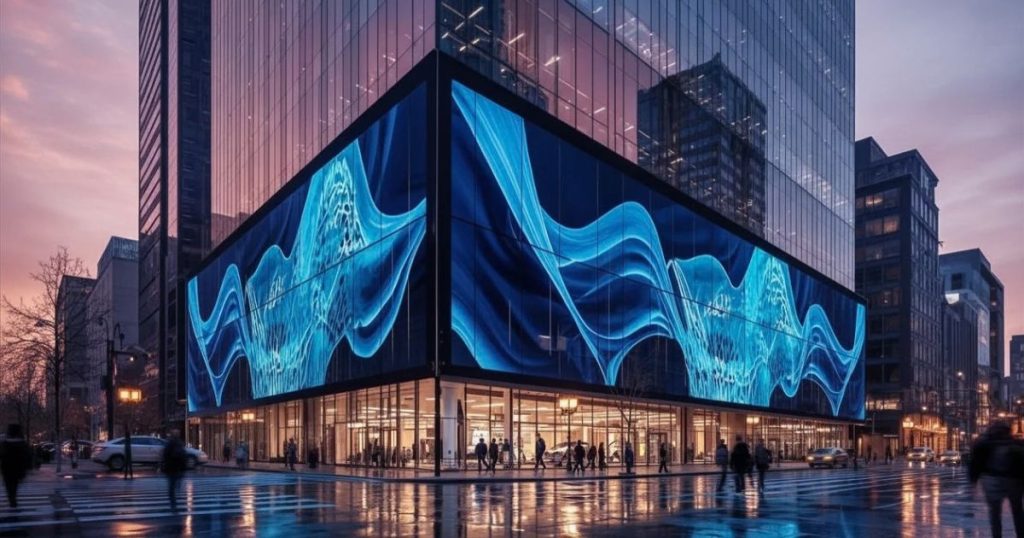
Buildings today are no longer just physical structures. They communicate. Sometimes subtly, sometimes very directly.If you look at newer commercial developments, mixed-use projects, and even premium retail clusters, you will notice one thing. The façade is no longer static. It is active. It changes, it responds, it attracts attention.
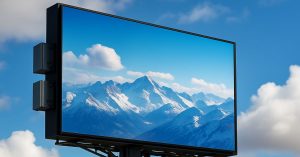
This is where outdoor LED display & LED wall integration start to play a role. Not as an add-on, but as part of the architecture itself.
We have worked on enough installations to see a clear shift. Earlier, LED screens were mounted onto buildings. Now, they are being designed into them. That changes everything. Design approach, structure, content, and even maintenance.
This guide looks at how architects and developers can approach LED-integrated façades and podiums in a practical way.
Why Façades Are Becoming Digital Surfaces
A façade used to be about materials, texture, and lighting. Now it is also about communication.
With an outdoor LED display & LED wall, the building can:
- Display brand identity
- Run dynamic campaigns
- Adapt to time and context
What this means practically is that the façade becomes a live interface. It is no longer passive.
In commercial developments, this creates value. It attracts attention, increases visibility, and enhances recall. In retail environments, it draws footfall. In corporate spaces, it strengthens presence.
But this shift requires planning from the beginning. Retrofitting rarely delivers the same result.
Integrating LED at the Design Stage
This is where most projects succeed or fail.
If LED is considered late in the design process, compromises are inevitable. Structure, wiring, ventilation, and access all become challenges.
When outdoor LED display & LED wall systems are integrated early:
- Structural load can be planned
- Power requirements can be allocated
- Maintenance access can be designed properly
At ALEDA, we often see better results when the façade design and LED planning happen together. It allows the system to sit naturally within the architecture rather than appearing attached.
And that makes a visible difference.
Also Read : Smart LED Ecosystems in India: DOOH & Retail Shift
Understanding Scale, Resolution, and Viewing Distance
Large façades create a different kind of design challenge.
An outdoor LED display & LED wall on a building is viewed from varying distances. Someone standing across the road sees it differently from someone viewing it from a moving vehicle.
Pixel pitch selection becomes critical here.
For example:
- A 4 mm pitch works well for medium viewing distances
- A 6.6 mm pitch supports longer distances
Choosing a very fine pitch for a large façade increases cost without adding practical value. On the other hand, a pitch that is too wide reduces clarity.
The key is balance.
Resolution should match viewing conditions, not just technical ambition.
Structural and Environmental Considerations
Outdoor installations are exposed to constant environmental stress.
Dust, rain, humidity, and temperature variations all affect performance. That is why an outdoor LED display & LED wall must be built for durability.
At ALEDA, outdoor modules use glue-pouring waterproofing to protect internal components. This helps improve resistance against moisture and dust.
Operating temperature also matters. Systems designed to function between -20°C and 50°C perform more reliably across different Indian climates.
For architects, this means factoring in:
- Ventilation
- Drainage
- Mounting stability
Ignoring these aspects leads to long-term issues.
The Role of flexible LED display & curved LED in Façade Design
Not every façade is flat. And that is where design possibilities expand.
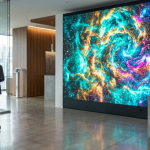
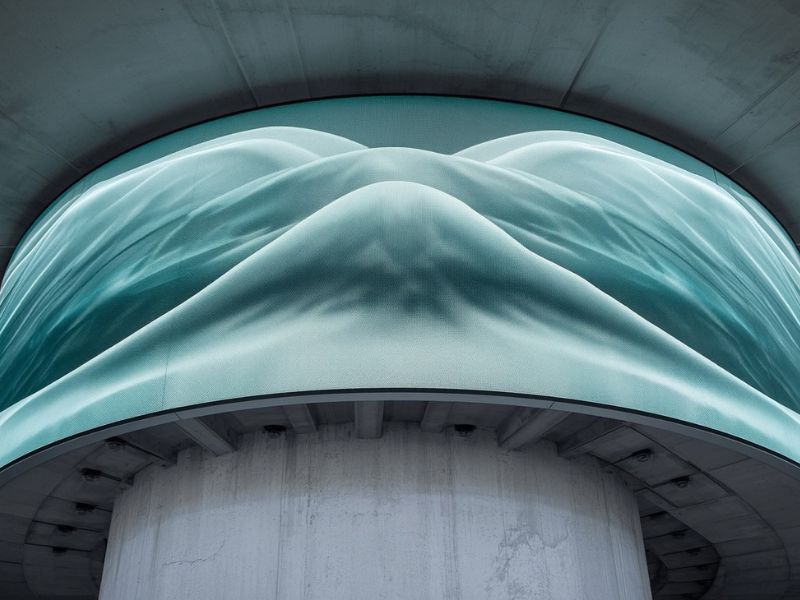
With flexible LED display & curved LED solutions, LED modules can adapt to non-linear surfaces. Columns, curves, and complex geometries become usable surfaces.
At ALEDA, flexible modules use FPC circuits and silicone structures that allow bending without compromising performance.
What this means for architects:
- Freedom in design
- Ability to create immersive surfaces
- Integration with unconventional forms
A curved façade with a flexible LED display & curved LED system does not just display content. It becomes an experience.
Podium-Level Integration and Human Interaction
Façades attract attention from a distance. Podiums operate at a closer level.
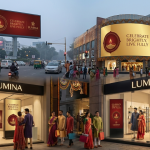
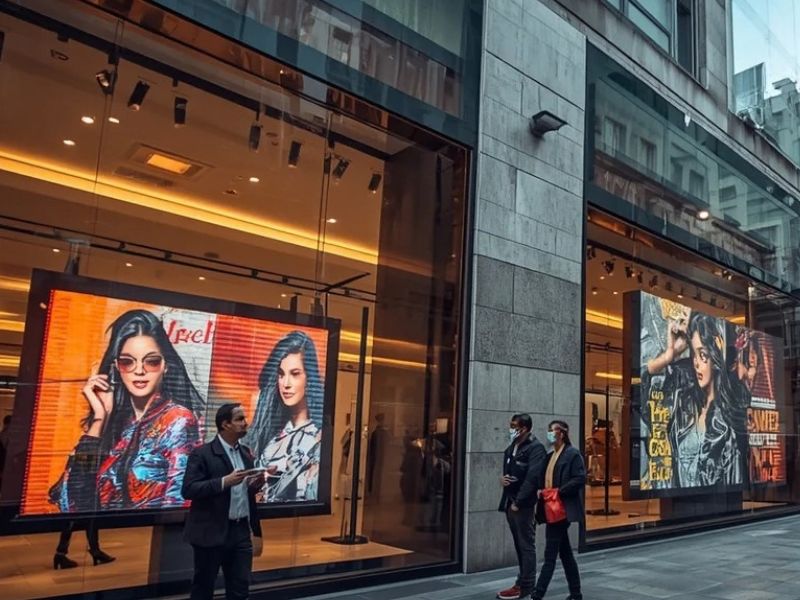
An outdoor LED display & LED wall at podium level interacts directly with people. Viewing distance is shorter, attention span is different, and content needs to adapt accordingly.
This is where:
- Lower pixel pitch becomes relevant
- Content clarity becomes critical
- Brightness needs to be controlled
Podium-level installations often influence how people move through a space. They guide attention, highlight entrances, and create focal points.
Designing for this level requires a different approach compared to large façade installations.
Content Strategy for Architectural LED Surfaces
Technology alone does not define impact. Content does.
For a façade-level outdoor LED display & LED wall, content needs to be:
- Bold
- High contrast
- Minimal in-text
For podium-level installations:
- Content can be more detailed
- Messaging can be more specific
Motion should be controlled. Excessive animation reduces readability, especially from a distance.
With flexible LED display & curved LED installations, content design becomes even more important. Curved surfaces require careful alignment to avoid distortion.
The goal is not to fill the screen. It is to communicate effectively.
Also Read : How to Design LED Video Wall Content: India Guide
Power, Maintenance, and Long-Term Planning
LED systems are long-term installations. Planning should reflect that.
An outdoor LED display & LED wall requires:
- Stable power supply
- Easy maintenance access
- Structured cable management
At ALEDA, cabinet designs support both front and rear service configurations depending on the application.
For developers, this means planning maintenance from the beginning. Access panels, service space, and safety considerations should not be added later.
Long-term performance depends on these decisions.
Balancing Aesthetics with Performance
There is always a tension between design intent and technical requirements.
Architects focus on form and aesthetics. LED systems require structural support, ventilation, and access.
The balance lies in integration.
A well-designed outdoor LED display & LED wall should:
- Align with the façade design
- Maintain visual continuity
- Deliver consistent performance
With flexible LED display & curved LED systems, this balance becomes easier to achieve. They allow the display to follow the form rather than interrupt it.
But it still requires coordination between design and engineering.
LED-integrated façades and podiums are no longer experimental. They are becoming standard in modern developments.
But the difference between a good installation and a poor one comes down to planning.
An outdoor LED display & LED wall should not be treated as an afterthought. It should be part of the architectural concept. When integrated early, it enhances both design and functionality. With solutions like flexible LED display & curved LED, the possibilities expand further. Buildings can become dynamic, responsive, and visually engaging.
At ALEDA, we see these systems as part of a larger shift. From static structures to active environments. For architects and developers who want to stay ahead of that expectation, the time to understand these systems is during the design process, not after the building is handed over. We are happy to be part of that conversation from the start. Visit https://www.aledaled.com/ or get in touch with our team to discuss your next project.
FAQ Section
What should architects consider before integrating an outdoor LED display in a façade?
Architects should consider structural load, power requirements, maintenance access, and environmental exposure. An outdoor LED display must be designed to handle dust, rain, and temperature changes. Planning these aspects early ensures better integration and long-term performance.
How does pixel pitch affect the LED wall on a building façade?
Pixel pitch determines clarity and viewing distance. A lower pixel pitch provides higher resolution but is suitable for closer viewing. For large façades viewed from a distance, a higher pixel pitch is more practical and cost-effective.
What are the advantages of flexible LED displays in architectural design?
Flexible LED display allows integration with curved and non-linear surfaces. It enables architects to create immersive and unconventional designs without being restricted to flat panels. This adds both visual and functional value to the structure.
Can curved LED installations affect content quality?
Curved LED installations require careful content alignment. If content is not designed properly, distortion can occur. However, with the right planning and mapping, curved LED systems can deliver seamless visuals across complex surfaces.
How is maintenance managed for large LED wall installations?
Maintenance depends on the cabinet design and access planning. Systems can be designed with front or rear service access. Proper planning ensures that components can be accessed and serviced without disrupting the entire installation.