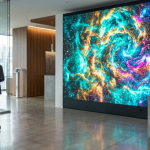
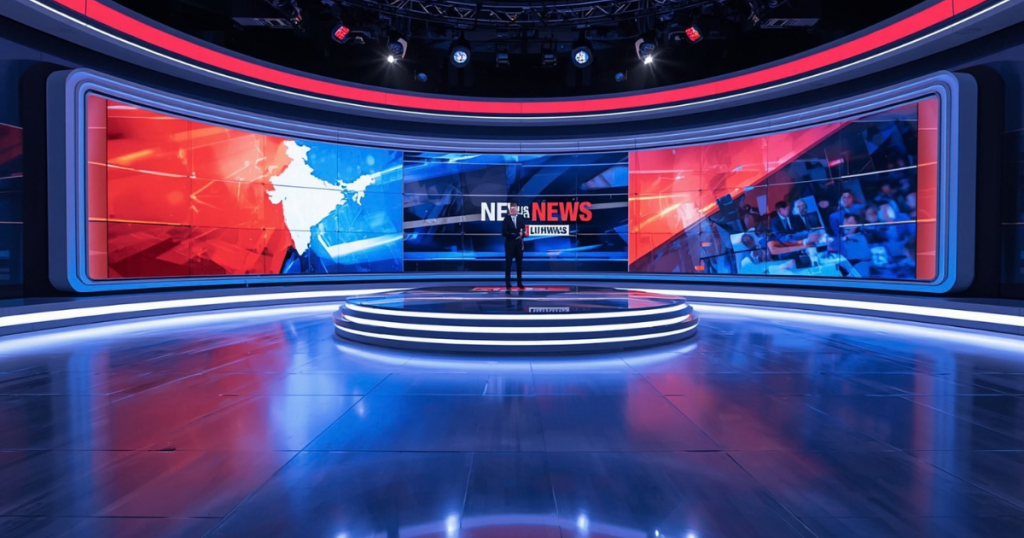
Walk into a modern broadcast studio today, and the environment feels completely different. Backgrounds are no longer static. Sets are not permanently built. Visuals change in real time, and in many cases, viewers cannot even tell whether the environment is physical or digital.
This shift is being driven by the rise of LED wall virtual production setups inside studios and control environments.
Instead of depending entirely on green screens and post-production rendering, studios are now using LED video walls to create immersive backgrounds during the actual shoot. It changes production speed, visual realism, and overall workflow efficiency. At ALEDA, we see this transition as more than just a display upgrade. It is changing the way broadcast environments are planned and operated.
What is LED wall virtual production
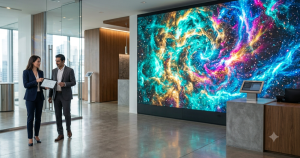
At its core, LED wall virtual production uses LED video walls as dynamic digital backgrounds during filming and broadcasting. Rather than replacing backgrounds later through editing, visuals are displayed directly on the LED wall during production itself. This means actors, presenters, and cameras interact with the actual environment in real time. The result feels far more natural because lighting, reflections, and depth behave realistically inside the scene. This also reduces dependence on extensive post-production workflows, which is one of the biggest reasons studios are moving towards this setup.
Why Broadcast Studios Are Adopting LED wall virtual production
Traditional production methods come with limitations. Green screens require controlled lighting, careful chroma keying, and long editing timelines. Static sets reduce flexibility and often consume large physical space.
With LED wall virtual production, studios gain much more adaptability.
One environment can instantly transform into another without physically rebuilding the set. Newsrooms, entertainment studios, discussion panels, and digital content environments can all operate within the same infrastructure.
From what we have observed, this improves:
- Production flexibility
- Studio utilisation
- Turnaround speed
In modern broadcast environments, speed matters just as much as visual quality.
The Importance of LED Performance in Studio Environments
Not every LED display performs well inside a broadcast setup.
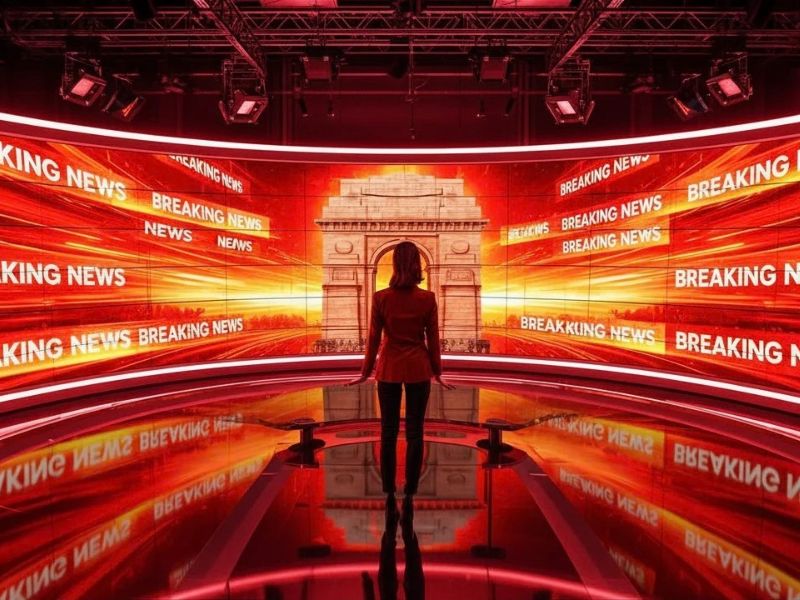
Studios are camera-facing environments, which means display performance needs to remain stable under continuous capture conditions.
At ALEDA, our indoor LED modules, such as IS 1.86 and IS 2.5, operate at refresh rates of 3840/7680 Hz. This helps reduce flicker and ensures stable visual playback, especially in broadcast studios, control rooms, and camera-facing environments. Brightness levels above 600 cd/m² support controlled indoor visibility while maintaining visual comfort.
For LED wall virtual production, stability is extremely important because even minor inconsistencies become visible through cameras.
Also Read : Designing LED-Integrated Façades & Podiums
Camera Interaction and Visual Accuracy
One of the biggest advantages of LED wall virtual production is how naturally it interacts with cameras. Unlike green screens, LED walls generate actual light and colour within the environment. Reflections behave more realistically. Shadows appear natural. Overall scene integration improves significantly. But this also means the display must be properly configured.
Refresh rate, grayscale handling, brightness stability, and colour consistency all influence how visuals appear on camera.
From our experience, refresh rates such as 3840/7680 Hz help maintain smooth playback and minimise visual instability even during moving shots or dynamic transitions. This becomes especially important in live production environments where visual consistency cannot fluctuate.
Flexibility in Set Design and Production Workflow
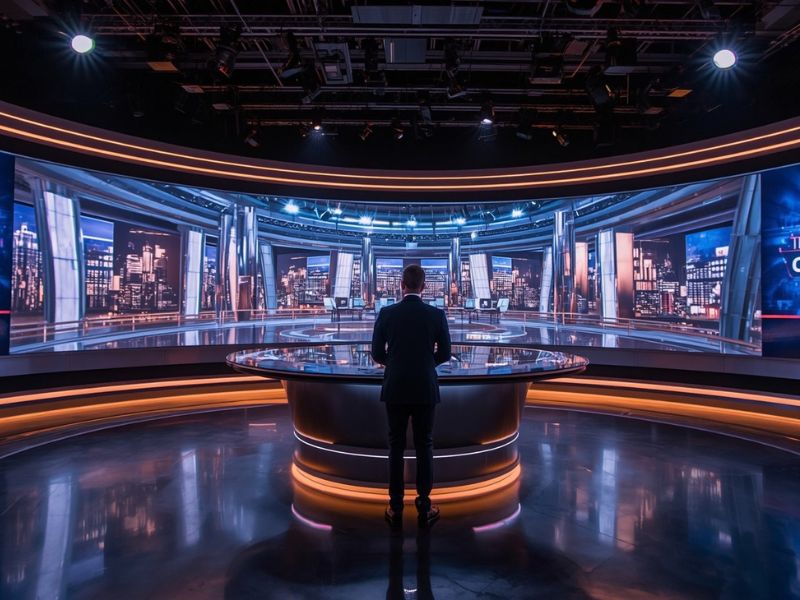
A major reason studios are shifting towards LED wall virtual production is flexibility.
Traditional sets require physical construction, storage, and redesign for every new environment. LED-based setups reduce that dependency.
One LED wall can display:
- Virtual studio environments
- Dynamic backgrounds
- Real-time graphics
- Immersive scenes
This changes the production process completely. Studios can move between different formats much faster without rebuilding physical infrastructure every time. That saves both production time and operational effort.
Content Planning for Virtual Production
Content design plays a central role in LED wall virtual production. Unlike standard displays, content for virtual production environments needs to work from the camera’s perspective. Motion, scale, depth, and lighting all need to remain controlled. High-resolution visuals and smooth playback become critical here.
At ALEDA, our LED systems are designed to support stable refresh performance and controlled visual output, which helps maintain consistency during production workflows. But the content itself still needs discipline. Overloaded visuals often create a distraction in studio environments. Clean compositions work better on camera.
Installation Precision and Structural Planning
Studio installations require much higher alignment precision compared to standard display applications. An LED wall virtual production setup must maintain seamless visual continuity because cameras capture every detail. Even minor gaps or uneven alignment become visible during production. Cabinet structure plays an important role here.
At ALEDA, we provide aluminium die-cast cabinet options with front service accessibility, helping maintain cleaner installation alignment while simplifying maintenance access.
Planning installation properly improves:
- Visual continuity
- Service accessibility
- Long-term operational stability
These details directly influence studio efficiency later.
Operational Efficiency and Long-Term Value
One of the strongest advantages of LED wall virtual production is operational efficiency.
Since backgrounds are generated in real time:
- Post-production timelines reduce
- Content turnaround becomes faster
- Workflow becomes more predictable
Studios can produce more content within the same timeframe. And this is not only about speed. It also changes how teams collaborate. Production, design, and technical teams begin working within a more integrated system rather than separate stages.
Also Read : Real ROI of Active LED Displays in India Explained
Where is broadcast production headed?
The adoption of LED wall virtual production is growing steadily across broadcast studios, virtual events, digital production spaces, and control environments. Studios are gradually moving towards hybrid setups where physical and digital production merge seamlessly. The focus is no longer just on display quality. It is on creating adaptive production ecosystems that can respond quickly to changing requirements. LED systems are becoming central to that transformation. LED video walls are changing more than studio visuals. They are changing the production logic itself.
LED wall virtual production allows studios to create flexible and immersive environments while reducing dependence on static infrastructure and extensive post-production.
Performance consistency, refresh stability, and installation precision all play a major role in how successful these systems become.
At ALEDA, we approach studio LED environments with a focus on long-term usability, stable visual performance, and real-world production requirements. Because in broadcast environments, reliability becomes just as important as visual impact. If you are planning a studio upgrade or evaluating virtual production environments, understanding how LED systems behave under actual production conditions becomes an important part of the decision-making process. You can connect with our team on 1800-102-0407.
FAQ Section
What is LED wall virtual production?
LED wall virtual production uses LED video walls as real-time digital backgrounds during filming and broadcasting. It reduces dependency on green screens and improves realism through live visual environments.
Why are studios shifting towards LED wall virtual production?
Studios are adopting LED wall virtual production because it improves flexibility, reduces post-production effort, and allows faster content turnaround. It also helps create more immersive visual environments.
Why is refresh rate important in broadcast LED walls?
Refresh rate affects how visuals appear on camera. Higher refresh rates, such as 3840/7680 Hz, help reduce flicker and maintain stable playback in camera-facing studio environments.
What type of LED displays work best for virtual production?
Indoor LED displays with fine pixel pitch, stable brightness, and high refresh rates are suitable for virtual production. They help maintain clarity and smooth visuals during filming.
Does LED wall virtual production improve workflow efficiency?
Yes, LED wall virtual production improves workflow by reducing editing timelines and enabling real-time environment creation. This allows studios to produce content more efficiently.