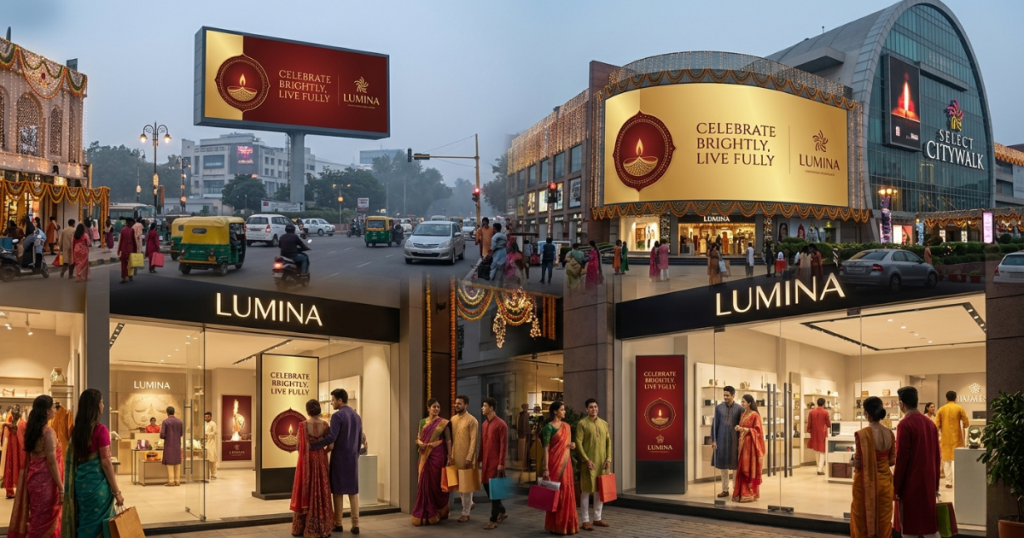
If you look around most Indian cities, you will still find static signage holding its ground. Hoardings, printed boards, fixed messaging. It has worked for years, so naturally people trust it. But the shift has already begun, and it is quite visible if you pay attention.
A screen today is not just a display surface. It is a communication system. And that is exactly where digital signage india & dooh advertising starts to change the equation.
We have seen brands move from one-message boards to dynamic environments where messaging evolves through the day. Morning communication looks different from evening. Promotions are not fixed anymore. They are responsive. That is a fundamental change.
This is not about replacing static with digital for the sake of it. It is about building a system that keeps communication alive.
Why Static Signage Is No Longer Enough in digital signage india & dooh advertising
Static signage has one major limitation. It cannot adapt.
Once installed, it stays the same until someone physically changes it. That takes time, cost, and coordination. In a market where campaigns move quickly, that delay becomes a problem.
Now compare that with digital signage India & dooh advertising. The ability to update content instantly changes how brands think. Communication becomes fluid. Messaging can be planned in layers instead of being locked into one visual.
And this is where things get interesting. A single screen can carry multiple messages, multiple campaigns, even multiple brands. That level of flexibility simply does not exist in static formats.
It is not just about visibility anymore. It is about relevance.
What Makes a Smart LED Ecosystem
A lot of people assume installing a screen is enough. It is not.
A smart system is not just hardware. It is a combination of display technology, content logic, and operational control. A digital signage display becomes effective only when these elements work together.
At ALEDA, we look at the display as one part of a larger system. Our indoor LED modules operate at refresh rates of 3840 Hz, which ensures that motion content remains smooth and stable. Outdoor modules are designed to deliver brightness above 5500 cd per square metre to maintain visibility in daylight.
But even with these specifications, the real value comes from how the system is used. If content is not updated regularly or structured properly, the screen becomes another static surface.
A smart LED ecosystem is one that keeps evolving.
Also Read: How to Design Content for LED Video Walls – A Practical Guide for Indian Brands
The Growing Role of dooh advertising in India
Urban India is changing fast, and dooh advertising is growing along with it.
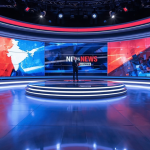
Look at airports, metro networks, and commercial districts. Digital screens are replacing traditional formats because they offer something static never could. Control.
With dooh advertising, brands can decide when their message appears, how often it appears, and who it is targeted at. This level of control allows better utilisation of space and better planning of campaigns.
It also changes how brands measure performance. Instead of relying only on presence, they can now think in terms of frequency and timing.
For a digital signage display, this creates a continuous communication loop. The message is no longer fixed. It is active.
How retail digital signage Is Changing Store Experience
Retail is where this transformation becomes very real.
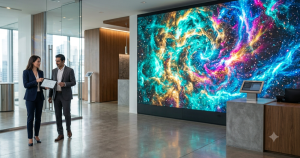
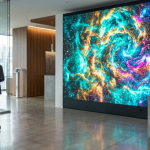
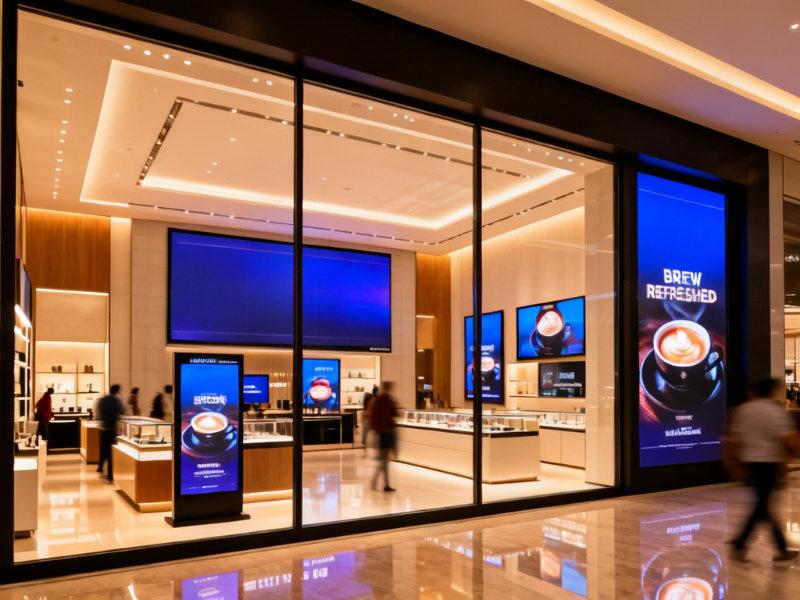
Walk into a store using retail digital signage, and you immediately notice the difference. The environment feels more dynamic. Products are highlighted through motion. Offers are updated in real time. The space itself feels more responsive.
But the real impact is subtle. It influences how customers move, where they look, and what they engage with.
We have seen how well-placed LED displays can guide attention within a store. But this only works when content is designed properly. High refresh rates ensure smooth visuals, but if the content is cluttered or poorly structured, the impact drops.
In retail digital signage, simplicity works better than complexity. Clear messaging, strong visuals, and controlled motion deliver better results.
Content Strategy Is Where Most Systems Fail
Technology gets a lot of attention. Content does not. And that is where most setups fall short.
A digital signage display is only as effective as the content running on it. If the messaging is unclear or overloaded, the screen loses its purpose.
Content needs to be built for attention. Not for explanation.
Short loops, clear visuals, and focused messaging work better. In most cases, 8 to 15 seconds is enough to communicate a single idea. Anything longer risks losing interest.
In digital signage india & dooh advertising, content should not try to say everything. It should say one thing clearly.
Reliability in Indian Conditions
India is not an easy environment for electronic systems. Heat, dust, humidity, and power fluctuations are constant factors.
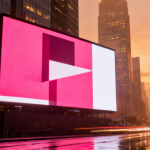
For outdoor applications, this becomes even more critical. A digital signage display installed outside must handle these conditions without frequent failures.
At ALEDA, outdoor modules are designed with protection mechanisms such as glue-pouring waterproofing and are built to operate within a wide temperature range. This ensures stability across different climates.
In dooh advertising, reliability directly affects performance. If the screen is not operational, the communication stops. And that has a direct impact.
Consistency matters more than peak performance.
Cost Is Not Just the Initial Number
Pricing conversations often stop at the upfront cost. But that is only one part of the story.
In digital signage India & dooh advertising, long-term value depends on how the system performs over time. Power consumption, maintenance, and lifespan all contribute to the total cost.
A lower initial investment may look attractive, but if the system requires frequent repairs or consumes more power, the overall cost increases.
A digital signage display should be evaluated over its entire lifecycle, not just at the point of purchase.
The Shift Towards Flexible and Integrated Displays
Another noticeable shift is in design.
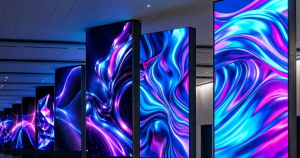
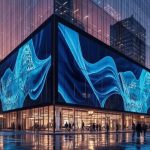
Displays are no longer limited to flat surfaces. With flexible LED modules using FPC circuits, installations can adapt to curves, columns, and architectural elements.
This opens up new possibilities for retail digital signage. The display becomes part of the space rather than an add-on.
In experience-driven environments, this makes a difference. The display does not just show content. It enhances the environment itself.
Also Read : High Brightness and Power Efficiency: The Two Pillars of Outdoor LED Displays
Where This Is Headed
The transition from static signage to digital systems is not temporary. It is a structural change.
More brands are moving towards integrated setups where hardware, content, and control systems work together. In digital signage India & dooh advertising, the focus is shifting towards continuous engagement rather than one-time visibility.
The screen is no longer the centre of attention. The system is.
Static signage still has its place, but its limitations are clear. It cannot adapt, it cannot evolve, and it cannot respond to changing communication needs.
A smart LED ecosystem changes that completely. It allows brands to communicate in real time, adapt messaging, and maintain engagement.
For businesses in India, the move towards digital signage india & dooh advertising is not just about technology. It is about staying relevant.
At ALEDA, we look at this transition as an opportunity to build systems that perform consistently and adapt over time. Because communication today is not about being seen once. It is about staying visible and meaningful.
If you are evaluating this shift, it helps to understand how the system fits your space and your audience. You can explore more about LED solutions and applications on www.aledaled.com.
FAQ Section
What is digital signage India and how is it different from traditional signage?
Digital signage india refers to the use of LED and digital display systems to deliver dynamic content. Unlike traditional signage, which is static and fixed, digital signage allows real-time updates and multiple content rotations. This makes it more flexible and efficient for modern communication needs.
How does dooh advertising work in India?
Dooh advertising works by using digital screens placed in high-traffic public locations. Content is scheduled and displayed in loops, allowing multiple advertisers to use the same screen. This improves utilisation and allows campaigns to be updated quickly without physical changes.
Why is retail digital signage becoming important?
Retail digital signage enhances customer experience by making stores more dynamic. It helps highlight products, promote offers, and guide customer attention. It also allows brands to update content quickly, making communication more effective.
What should be considered before installing a digital signage display?
Key considerations include viewing distance, brightness, pixel pitch, installation environment, and maintenance requirements. Choosing the right combination ensures that the display performs effectively over time.
Is digital signage suitable for outdoor use?
Yes, digital signage can be used outdoors, but it must be designed for external conditions. Outdoor systems require higher brightness and protection against environmental factors such as dust and rain to ensure reliable performance.