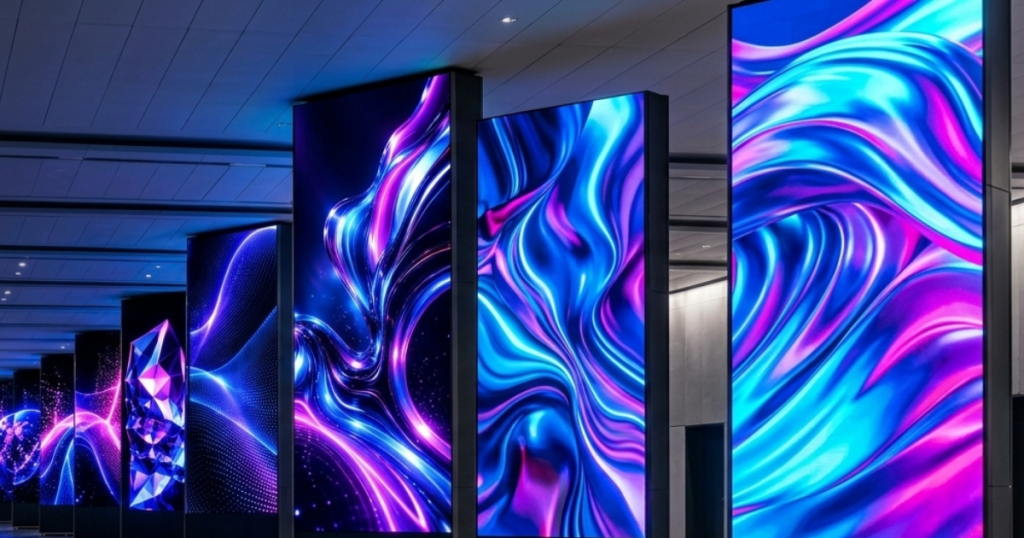
LED displays are becoming an increasingly important part of how brands, businesses and public spaces communicate with people. From indoor corporate environments and retail spaces to outdoor advertising, digital signage and creative installations, the application of LED technology is becoming more diverse. But choosing an LED display in 2026 is not simply about selecting the latest specification. Buyers need to understand how pixel pitch, viewing distance, brightness, refresh rate, installation format, service access and the intended application work together.
The current ALEDA portfolio reflects this application driven approach, with indoor, outdoor and flexible LED display solutions, along with cabinets, LED drivers and linear lighting. So, what should buyers and brands look for when evaluating LED display solutions in 2026?
Choosing Pixel Pitch According to the Application
Pixel pitch remains one of the most important specifications to understand when selecting an LED display. Pixel pitch refers to the distance between two adjacent pixels on an LED display. A smaller pixel pitch provides greater pixel density and is generally suited to situations where viewers are closer to the screen. However, smaller does not automatically mean better for every application. The right pixel pitch depends on factors such as viewing distance, screen size, content and the environment in which the display will be installed. ALEDA’s current portfolio demonstrates this range. Its indoor series includes the IS 1.86 Full Color, with a 1.86 mm pixel pitch, while the IS 2.5 Full Color uses a 2.5 mm pixel pitch. For outdoor applications, ALEDA offers the OS 4 Full Color with a 4 mm pixel pitch and the OS 6 Full Color with a 6.6 mm pixel pitch. This shows why pixel pitch should be selected based on the actual application rather than simply choosing the smallest available number.
What should buyers consider?
Before finalising pixel pitch, buyers should clearly define:
- How close the audience will be to the display
- Whether the display will be installed indoors or outdoors
- What type of content will be shown
- Whether text needs to be viewed at close range
- The overall dimensions of the display
This approach can help ensure that the selected display is appropriate for the intended viewing conditions.
Fine Pixel Pitch for Close Viewing Environments
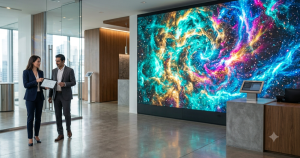
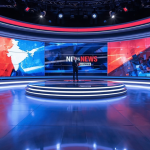
One of the important developments in LED display solutions is the growing availability of fine pixel pitch displays for environments where people view the screen from relatively short distances. ALEDA’s IS 1.86 Full Color is designed for indoor applications and uses SMD1515 LEDs with a 1.86 mm pixel pitch. The brochure specifies brightness above 600 cd/m² and a 3840 Hz refresh rate. It also describes applications including luxury retail displays, broadcast backdrops and boardrooms. The IS 2.5 Full Color uses SMD2121 LEDs and has a 2.5 mm pixel pitch, brightness above 600 cd/m² and a 3840 Hz refresh rate. The brochure positions it for indoor branding, communication and media applications, including showrooms and conference halls. For buyers, the key consideration is not simply whether a display has a fine pixel pitch. It is whether the viewing conditions justify it. A display installed in a boardroom, showroom or close-view indoor environment may require a different specification from a large outdoor display viewed from a distance.
High Refresh Rate for Dynamic and Camera Facing Content
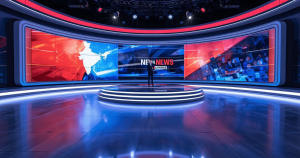
Refresh rate is another specification buyers should understand, particularly when displays are being used for dynamic visual content or in environments where cameras are involved. ALEDA’s indoor IS 1.86 Full Color and IS 2.5 Full Color modules are specified with a 3840 Hz refresh rate. The IS 1.86 description specifically highlights its suitability for broadcast backdrops and states that its high refresh rate supports flicker-free visuals during camera capture. The outdoor OS 4 Full Color and OS 6 Full Color modules are also specified with a 3840 Hz refresh rate. For buyers, this makes refresh rate particularly relevant when evaluating applications involving video, live content, broadcast or other camera-facing environments. It should still be evaluated alongside other specifications rather than considered in isolation.
Flexible LED Displays Are Expanding Creative Possibilities
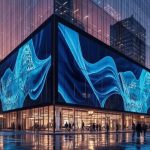
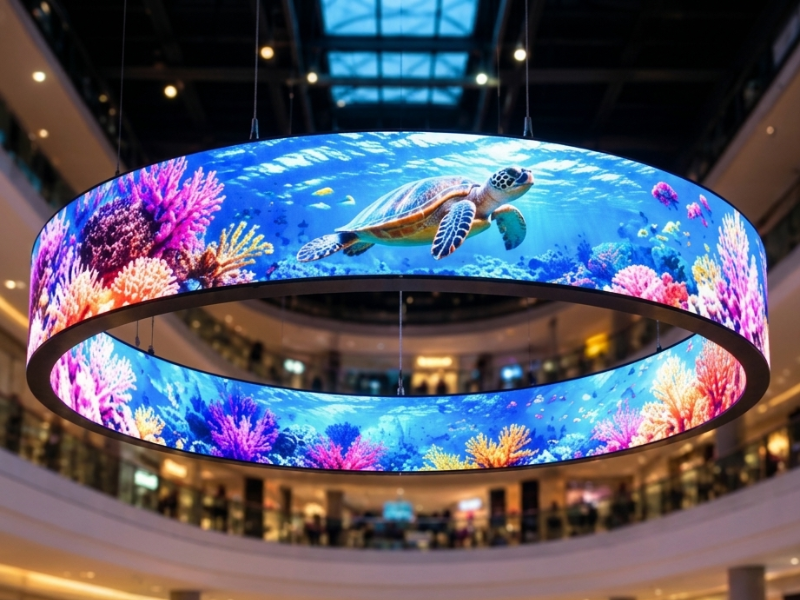
LED displays no longer have to be limited to conventional flat rectangular formats. Flexible LED modules can allow designers to explore curved and creative installations where a standard rigid display may not be suitable. ALEDA’s Flex Series includes the IS 1.86 Full Color (F). It uses an FPC circuit and reinforced silicone shell and can bend to a 30° angle. The brochure describes applications including ribbons, spirals, columns and waves, along with experiential retail, exhibition backdrops and hotel lobbies. The module has a 1.86 mm pixel pitch, SMD1515 LEDs, brightness above 600 cd/m² and a 3840 Hz refresh rate. Its profile is specified at 7.5 mm, with magnetic mounting and anti-warping magnets. ALEDA also lists the IS 2.5 Full Color (F) under its flexible range. It is designed for indoor creative and curved applications and uses SMD2121 LEDs, with a 2.5 mm pixel pitch, brightness above 600 cd/m² and a 3840 Hz refresh rate. For architects, designers and brands, this creates a different way of thinking about LED displays. Instead of treating the screen as a separate rectangular object, the display can become part of the visual form of the installation.
Outdoor LED Displays Need Different Specifications
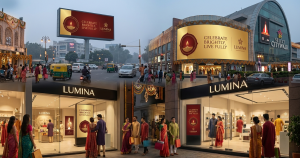
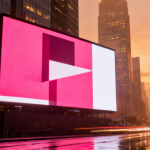
Outdoor LED displays operate in conditions that are very different from indoor environments. Bright daylight, changing weather conditions and longer viewing distances all influence how an outdoor display needs to be specified. ALEDA’s outdoor portfolio includes the OS 4 Full Color and OS 6 Full Color. The OS 4 Full Color has a 4 mm pixel pitch, SMD1921 LEDs, brightness above 5500 cd/m² and a 3840 Hz refresh rate. The brochure describes it for applications including digital billboards, highway signage and building façades. The OS 6 Full Color has a 6.6 mm pixel pitch, SMD2727 LEDs, brightness above 5500 cd/m² and a 3840 Hz refresh rate. It is positioned for information displays, advertising boards and civic digital signage. This illustrates an important buying principle: outdoor LED displays should be evaluated according to the environment, viewing distance and application instead of using indoor display specifications as a benchmark.
Single Colour LED Displays Still Have Specific Applications
Not every digital communication requirement needs a full colour LED display. ALEDA’s portfolio also includes the OS 10 White, an outdoor white LED display with a 10 mm pixel pitch. The brochure positions it for long distance visibility and applications such as road signage, perimeter security messaging and outdoor transport networks. It uses white SMD lamps and has a specified brightness of more than 4000 cd/m². This is a useful reminder for buyers. Technology selection should begin with the communication requirement. If the purpose is straightforward information, directional messaging or specific single colour communication, a monochrome display may be more appropriate than automatically selecting a full colour screen.
Serviceability Is an Important Part of LED Display Selection
An LED display is a long term installation, so maintenance access should be considered before the display is installed. ALEDA’s cabinet range includes front service and rear service configurations. The AL FS is an aluminium die cast front service cabinet designed for indoor use where rear access is limited. Its front service configuration allows display components to be accessed and maintained from the front. ALEDA also lists the IR FS, an iron mild steel front service cabinet intended for indoor use where rear access is restricted. For outdoor applications, the brochure lists rear service cabinets including AL RS and IR RS. The AL RS is an aluminium die cast rear service cabinet with an IP65 rating, while the IR RS is a mild steel rear service cabinet with an IP65 rating. Both are designed for outdoor use with components accessed from the rear. This is an important consideration for project teams because the physical location of the display determines which service configuration is practical.
A simple question buyers should ask, Where will the technician access the display from when maintenance is required?
This question can influence cabinet selection, installation planning and the overall practicality of the project.
LED Cabinets Are Part of the Display Solution
The LED module is only one part of an LED display system. The cabinet in which the modules are installed also plays an important role in how the display is assembled, installed and maintained. ALEDA’s brochure includes cabinets in both aluminium die cast and mild steel configurations, with front and rear service options. This gives buyers different configurations depending on the installation requirements. For example, where rear access is restricted, a front service configuration can provide a practical maintenance approach. Where the installation allows technicians to work from the back, a rear service cabinet can be considered. The choice should therefore be made during the project planning stage rather than after the display design has already been finalised.
LED Display Solutions Are Moving Beyond Screens
Another important development is the broader role of LED technology across visual communication and lighting. ALEDA’s portfolio is not limited to LED display screens. Its brochure also includes LED modules, LED drivers and cabinets, along with linear lighting solutions. The LW 20 is a 600 mm, 20 watt white linear lighting fixture intended for applications such as display counters, under shelf lighting and architectural accents. The LW 40 is a 1200 mm, 40 watt white linear lighting product described for office corridors, showrooms and gallery walls. The LW 80 is a 2400 mm, 80 watt white linear lighting product designed for applications including industrial halls, long commercial aisles and façade lighting. For businesses and designers, this broader portfolio means that digital display and lighting can be considered as separate requirements within the same project, depending on the desired application.
Energy Consumption Should Be Considered Alongside Performance
Energy consumption is another factor buyers should examine when comparing LED display solutions. The actual power requirement depends on the specific module and operating conditions, so buyers should refer to the technical specifications of the selected product rather than applying one power figure to every LED display. For example, ALEDA specifies maximum module power consumption of up to 43.5 W for the OS 4 Full Color and up to 41.5 W for the OS 6 Full Color. The IS 1.86 Full Color is specified at up to 15 W per module, while the IS 2.5 Full Color is specified at up to 17.5 W per module. These figures demonstrate why power consumption should be checked at the individual product level. For a project, buyers can consider the display’s size, expected operating hours and specified power requirements when planning the electrical infrastructure.
How Should Buyers Choose an LED Display in 2026?
The most practical way to select an LED display is to start with the application and work backwards towards the specification.
Start with the viewing distance
Determine how close the typical viewer will be to the display. This provides an important starting point for selecting pixel pitch.
Define the environment
An indoor boardroom, retail showroom, outdoor billboard and highway signage application will have very different requirements.
Understand the content
Consider whether the display will primarily show text, graphics, advertising, video, live content or a combination of different formats.
Check brightness requirements
Indoor and outdoor environments have different lighting conditions. Outdoor displays may require significantly higher brightness than indoor displays.
Consider maintenance access
Decide whether technicians will have access to the rear of the display or whether a front service cabinet is more appropriate.
Evaluate the complete specification
Pixel pitch should not be considered independently. Buyers should review brightness, refresh rate, LED type, scan mode, power consumption, cabinet configuration and environmental suitability together.
What Do LED Display Trends in 2026 Mean for Brands?
For brands, the biggest opportunity is not simply having a larger screen. It is using the right display format for the communication objective. An indoor LED display can support corporate communication, showrooms, conference environments and media applications. Outdoor displays can be used for advertising, information and civic digital signage. Flexible LED modules can support creative installations where the display becomes part of the physical design.
What Should Buyers Look for in LED Display Trends 2026?
The important shift in 2026 is towards application specific LED display solutions. Different environments need different specifications. A 1.86 mm indoor display designed for close viewing cannot simply be evaluated in the same way as a 6.6 mm outdoor display intended for medium range visibility. Similarly, a flexible display designed for creative curved installations has a different purpose from a conventional outdoor display designed for advertising or information communication. ALEDA’s current product portfolio illustrates this diversity, covering indoor displays from 1.86 mm and 2.5 mm pixel pitches, flexible versions of these indoor formats, outdoor displays at 4 mm and 6.6 mm, a 10 mm white outdoor display, service cabinets and linear lighting solutions. This is why the right buying decision should be based on application, viewing conditions, installation requirements and technical suitability, rather than on one specification alone.
The most relevant LED display trends 2026 are closely connected to how LED technology is being used across different environments. Fine pixel pitch displays are suited to applications where viewers are closer to the screen. Outdoor displays need specifications suited to high brightness and exterior environments. Flexible LED modules open possibilities for curved and creative installations, while front and rear service cabinets address different maintenance requirements. At the same time, LED technology is extending beyond conventional display screens into modules, drivers, cabinets and linear lighting solutions. For buyers and brands, the most important lesson is simple: the best LED display is not necessarily the one with the highest specification. It is the one that fits the application. Understanding viewing distance, environment, content, brightness, refresh rate, service access and power requirements can make the selection process more practical and more informed. And as LED applications continue to evolve, buyers who understand these fundamentals will be better positioned to choose solutions that are appropriate for their actual project requirements.
FAQs
What are the major LED display trends in 2026?
The major areas to watch include application specific pixel pitches, fine pitch indoor displays, flexible LED formats, outdoor LED solutions, serviceable cabinet designs and the wider use of LED technology across displays and lighting.
What pixel pitch should I choose for an LED display?
There is no single pixel pitch that is right for every project. The selection should consider viewing distance, display size, content and installation environment. ALEDA’s portfolio includes 1.86 mm and 2.5 mm indoor options, flexible versions, and 4 mm and 6.6 mm outdoor options.
Why is refresh rate important in an LED display?
Refresh rate affects how smoothly an LED display reproduces dynamic content and can be particularly relevant in camera facing applications. ALEDA’s IS 1.86 Full Color, IS 2.5 Full Color, OS 4 Full Color and OS 6 Full Color specifications include a 3840 Hz refresh rate.
What is a flexible LED display?
A flexible LED display uses a construction that allows the display module to bend rather than remaining completely rigid. ALEDA’s IS 1.86 Full Color (F), for example, is designed for indoor creative and curved applications and can bend to a 30° angle.
What is the difference between front service and rear service LED cabinets?
A front service cabinet allows display components to be accessed from the front, which is useful where rear access is limited. A rear service cabinet requires access from the back. ALEDA offers both configurations across its cabinet range.
What outdoor LED displays does ALEDA currently list?
The brochure lists OS 4 Full Color, OS 6 Full Color and OS 10 White within its outdoor display offerings. OS 4 has a 4 mm pixel pitch, OS 6 has a 6.6 mm pixel pitch and OS 10 White has a 10 mm pixel pitch.
Does ALEDA offer lighting solutions as well as LED displays?
Yes. The ALEDA brochure includes linear lighting products such as LW 20, LW 40 and LW 80, covering different lengths and wattages for indoor and outdoor lighting applications.
What should buyers check before purchasing an LED display?
Buyers should evaluate viewing distance, indoor or outdoor environment, content requirements, pixel pitch, brightness, refresh rate, power consumption, cabinet type and maintenance access. Looking at these factors together is more useful than comparing one specification in isolation.